The Bench
Every guitar has a story. Some just need a little help telling it again.
This is where vintage, unusual and forgotten instruments come back to life — from fretwork and electronics to full restorations and the occasional resurrection.
Follow the projects, the problems, the surprises and the solutions.
The 1965 Burns/Baldwin Virginian
A Tale of Two Continents
The Origin Story
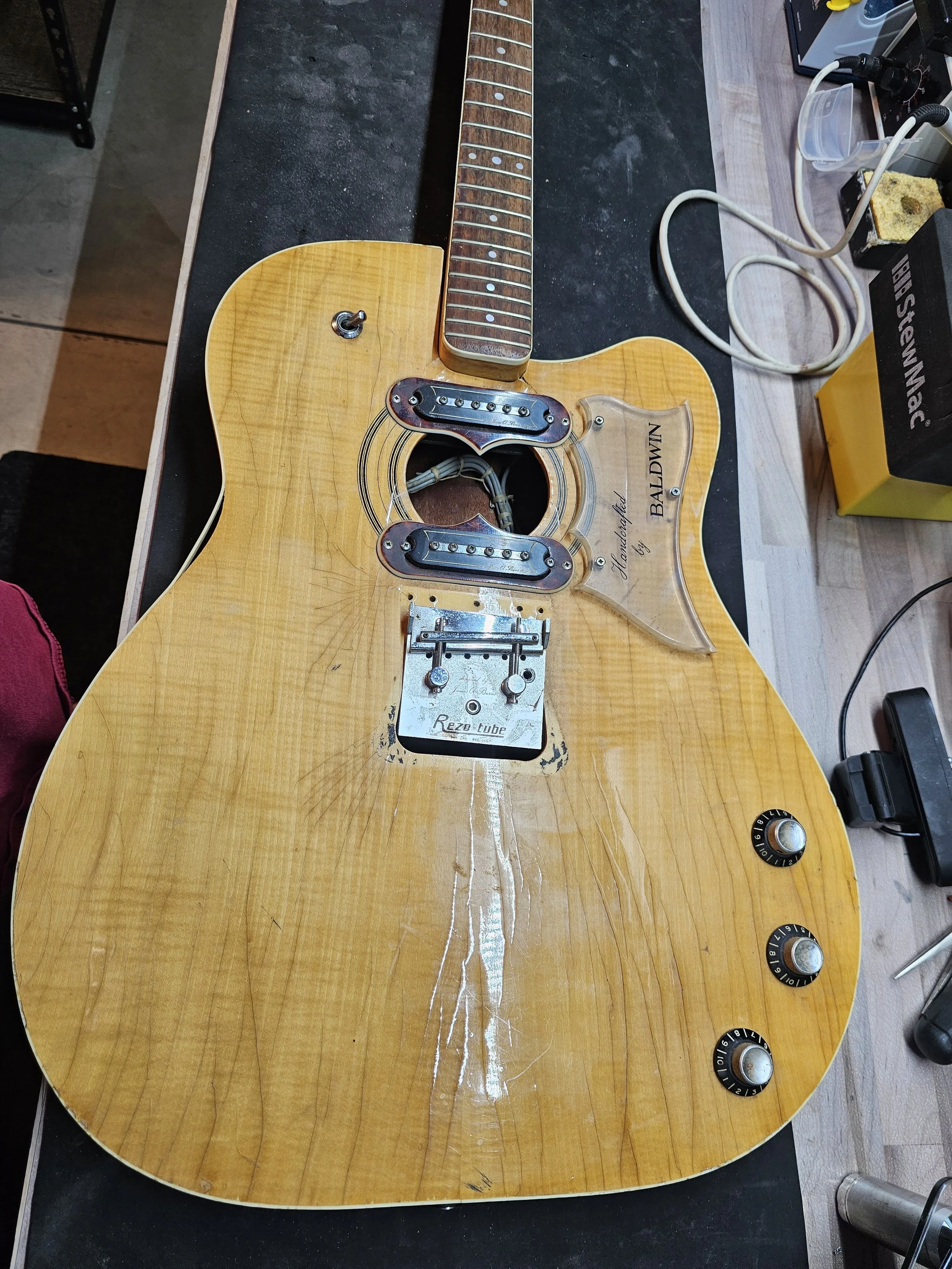
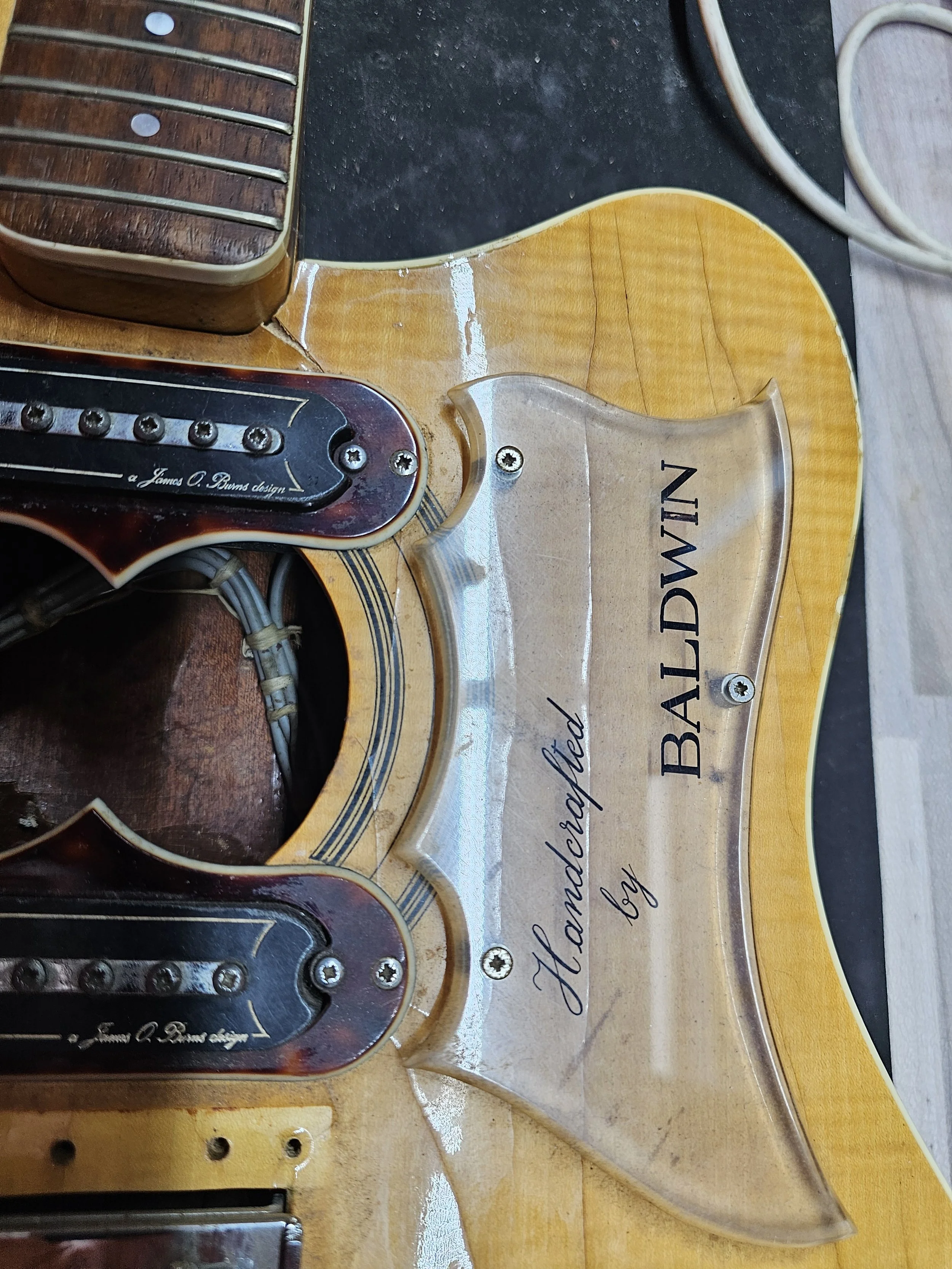
In 1965, the guitar world was reeling from "the acquisition." Jim Burns, often called the "Leo Fender of Great Britain," had sold his London-based company to the American piano giant, Baldwin. This Virginian was born right in the middle of that transition. It’s a fascinating hybrid—an acoustic-sized, semi-hollow body with a bolt-on neck and a hand-carved "scroll" headstock that looked more like a violin than a rock-and-roll machine.
What Makes It Special
The Virginian was an oddity from day one. It features the "Rezo-tube" vibrato system and a pair of Rez-o-Matik pickups that give it a hi-fi clarity that most American semi-hollows of the era lacked. But the real "hook"? The top is a beautiful, book-matched flame maple that was clearly intended to impress the new American owners.
Why It’s a "Bench" Priority
With only about 75 of these ever produced, they are the definition of a "rare bird." Most have spent decades in attics where the British glues have failed or the unique electronics have developed those "electrical ghosts." Restoring one isn't just about playability—it’s about saving a piece of Anglo-American guitar history before it disappears.
On the Bench: Structural Triage & Electrical Ghosts
The "Ship in a Bottle" Wiring Harness
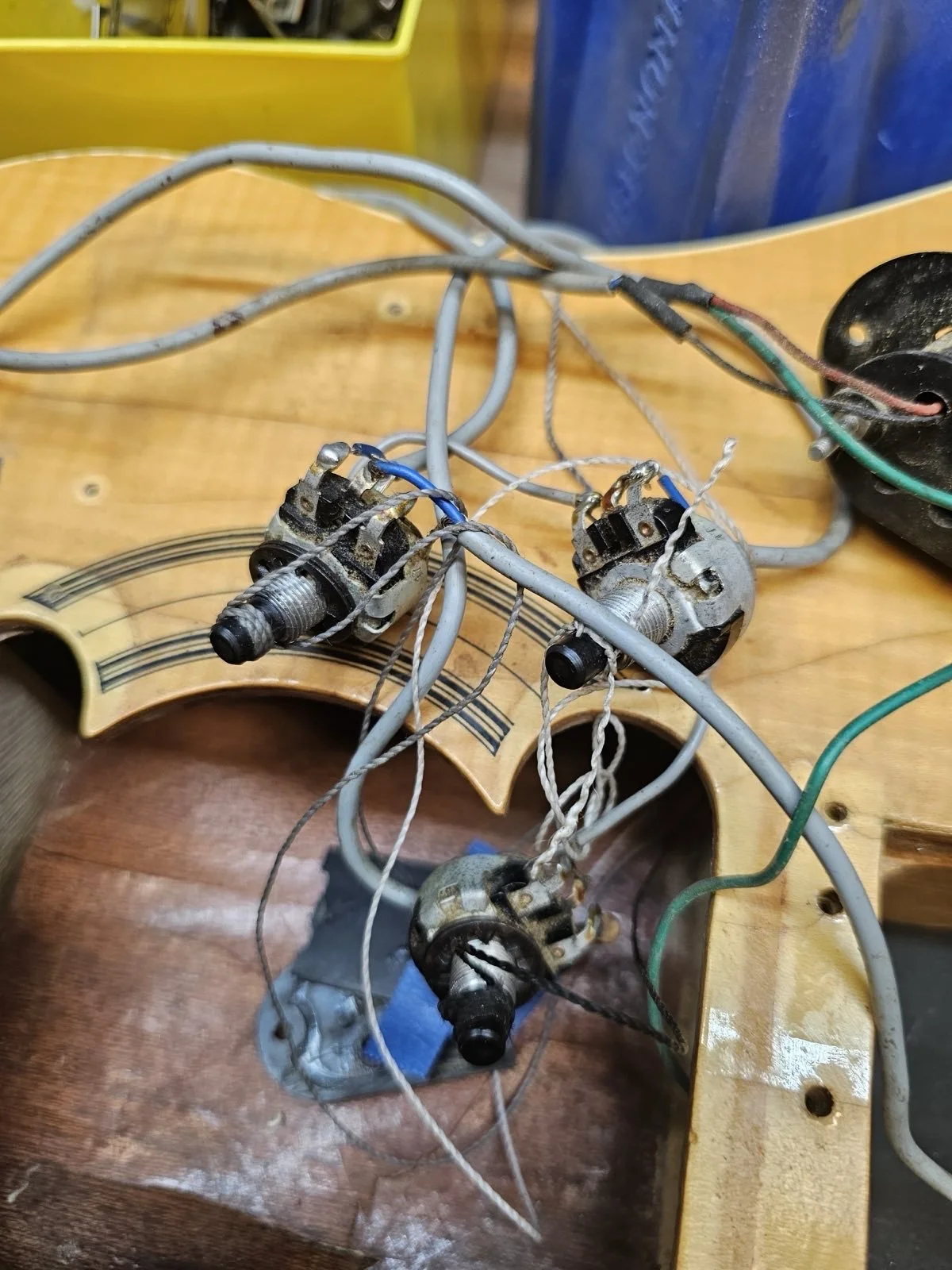
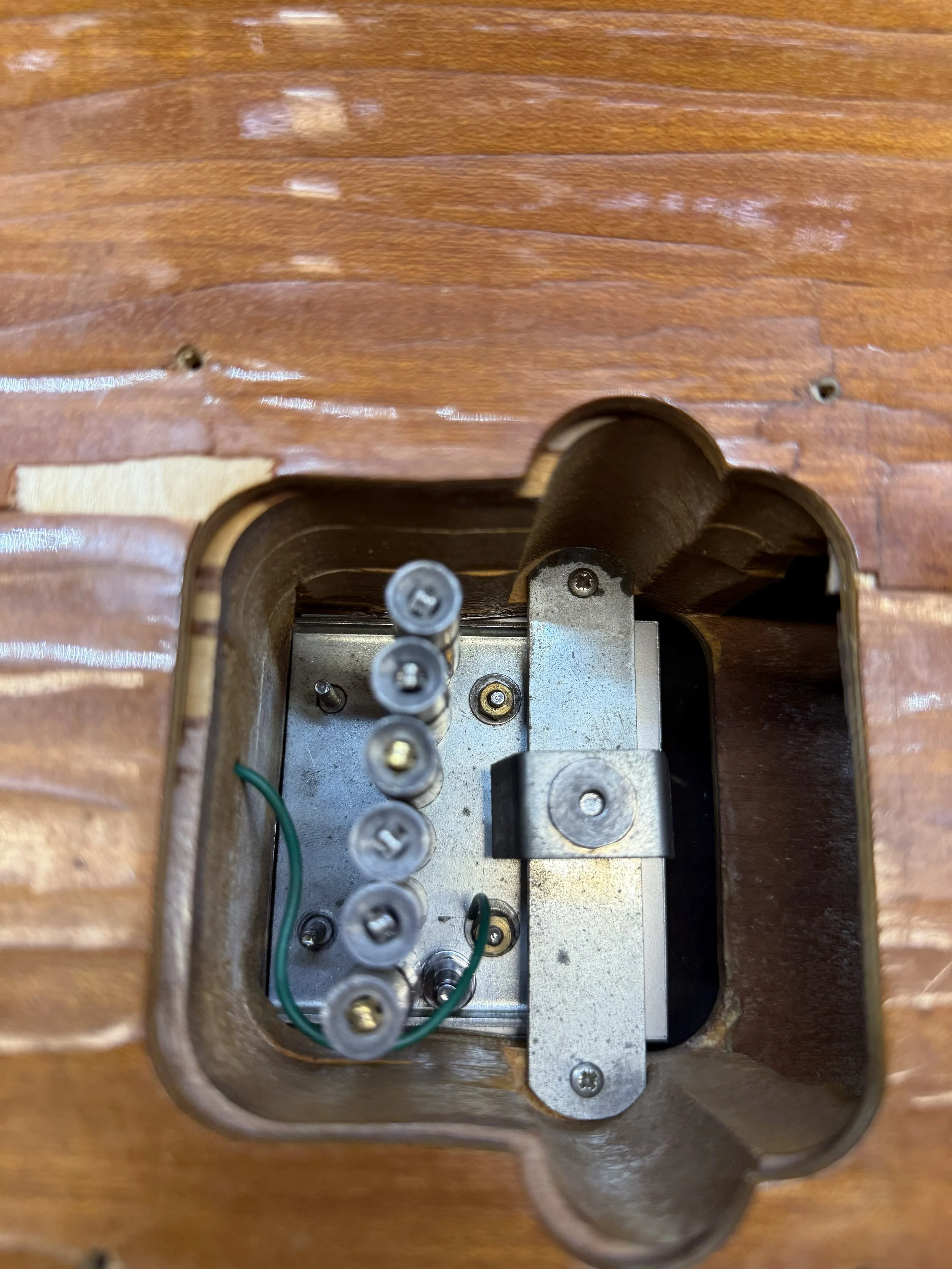
Restoring a semi-hollow body like the Virginian is a masterclass in spatial geometry and patience. Because there is no back-access plate on this chassis, the entire wiring harness had to be meticulously fished out through the f-holes. Waxed twine works great for this, readily available at craft stores like Michael’s. Every original pot, the eccentric switching, and the fragile 60-year-old lead dress required delicate handling to ensure it was stabilized, noise-free, and structurally secure before being re-seated.
Rescuing the Rez-o-Matik Pickup
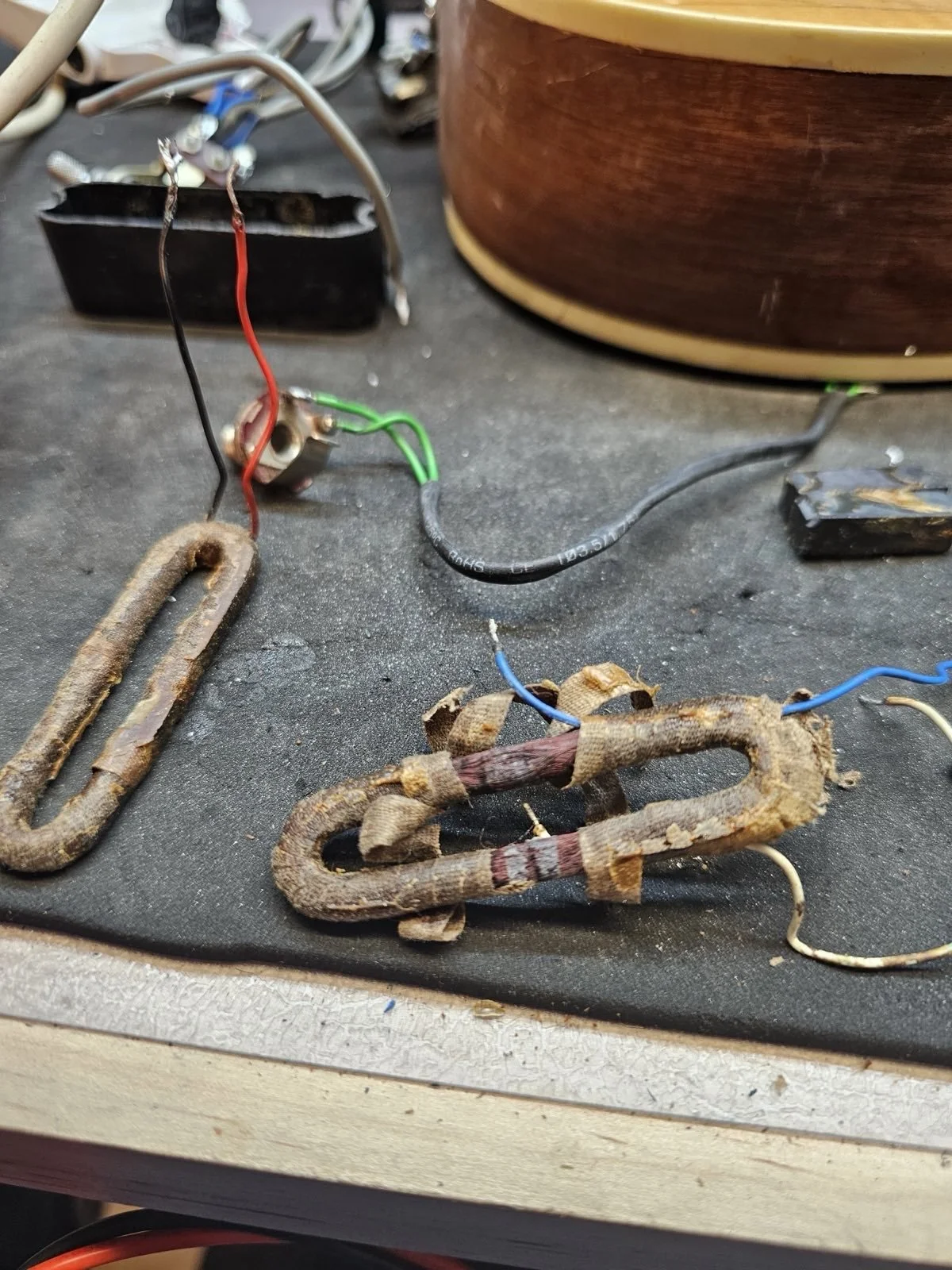
The surprise of this restoration was a completely dead ‘second’ neck pickup—a common casualty of time and fragile vintage windings. Burns used an innovative double winding - essentially a vertical humbucker with the windings stacked on top of each other. Separate controls allow for unique voicing using all three windings. However, our Virginian had a dead coil on its lower neck winding. Replacing it with a modern off-the-shelf alternative would have stripped the instrument of its unique voice and archival value.
We sent the unit to master winder Tom Brantley, who deserves immense credit for a monumental save. Tom meticulously rewound the original bobbin to its factory-spec "Rez-o-Matik" glory. Thanks to his precision work, the guitar retains its original 1965 magnets and housing, but breathes with a fresh, reliable wind that brings back that iconic, hi-fi British clarity.
Stabilizing a Compromised Chassis
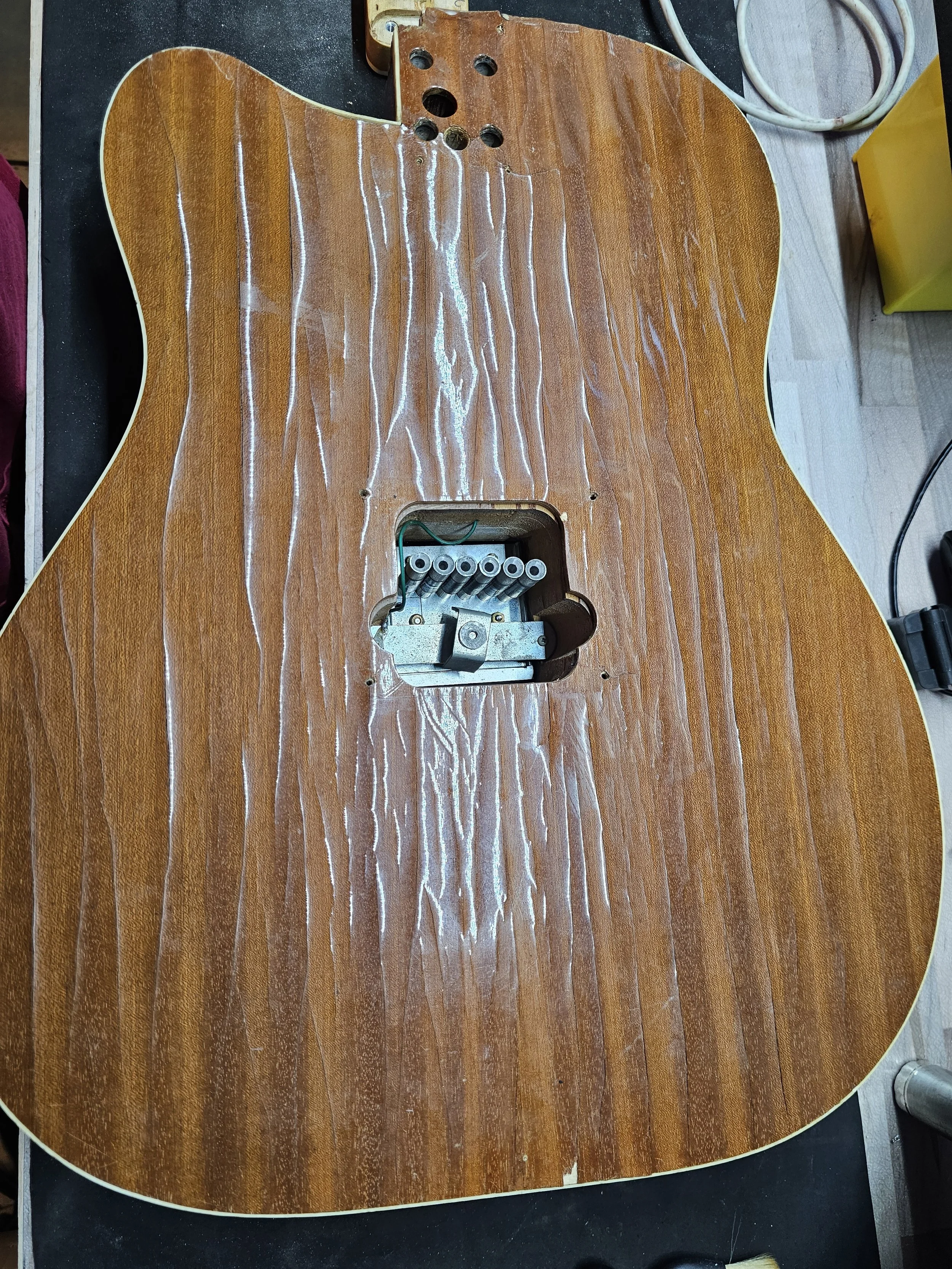
The physical body presented its own set of high-stakes challenges. Decades of fluctuating humidity had caused significant delamination across the back of the guitar. Rather than executing an invasive, value-stripping cosmetic refinish, the focus here was pure structural stabilization—carefully securing and sealing the layers to halt further spread while preserving the wood's natural resonance.
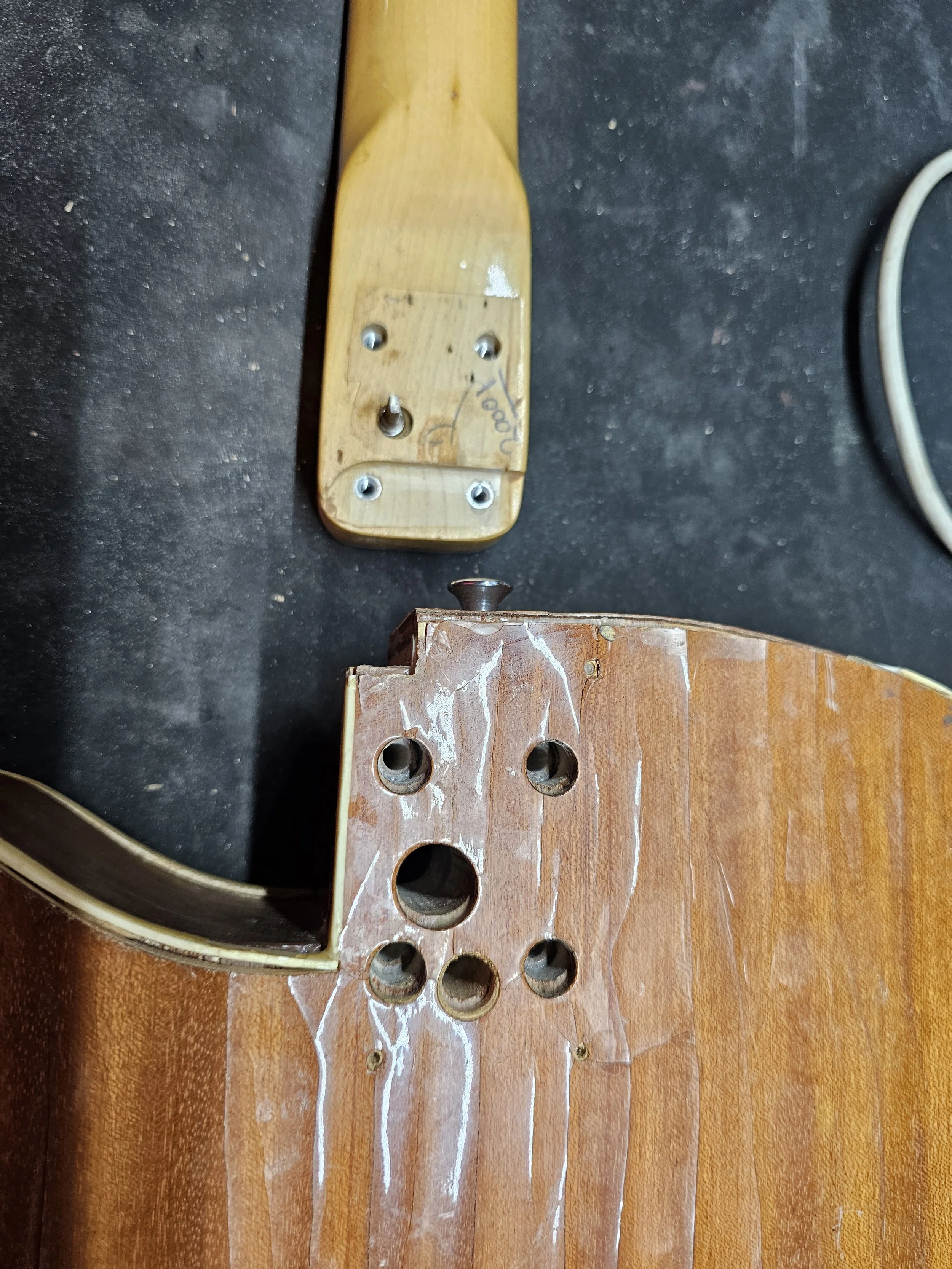
Finally, the neck joint—notoriously weak on these early bolt-on semi-hollows after sixty years of string tension—was a complete mess. Using the heavy-duty original stabilization screw, the joint was carefully shimmed, re-seated, and reinforced.
Frets, Nut, and that Insane Tremolo
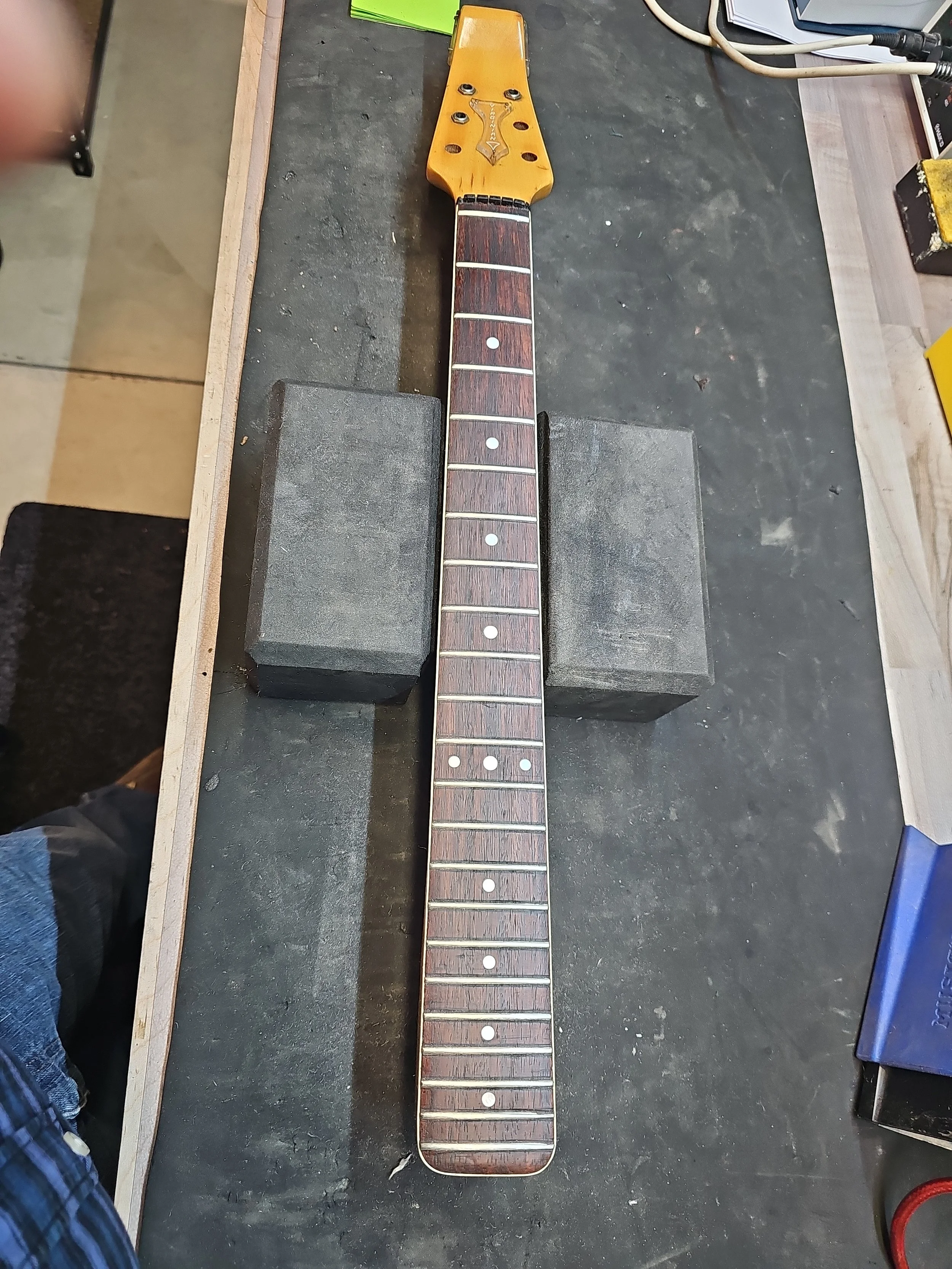
The neck, thankfully, was in fairly good shape, with enough meat on the bones to do a fairly straightforward level, crown and polish. The zero fret eliminates much of the worry about nut height, so that saved an hour or two. It’s important to remember that the zero fret is not an actual fret, its the actual nut in that its the far end of the string so you can’t level file it with all the others. It has to be at nut height.
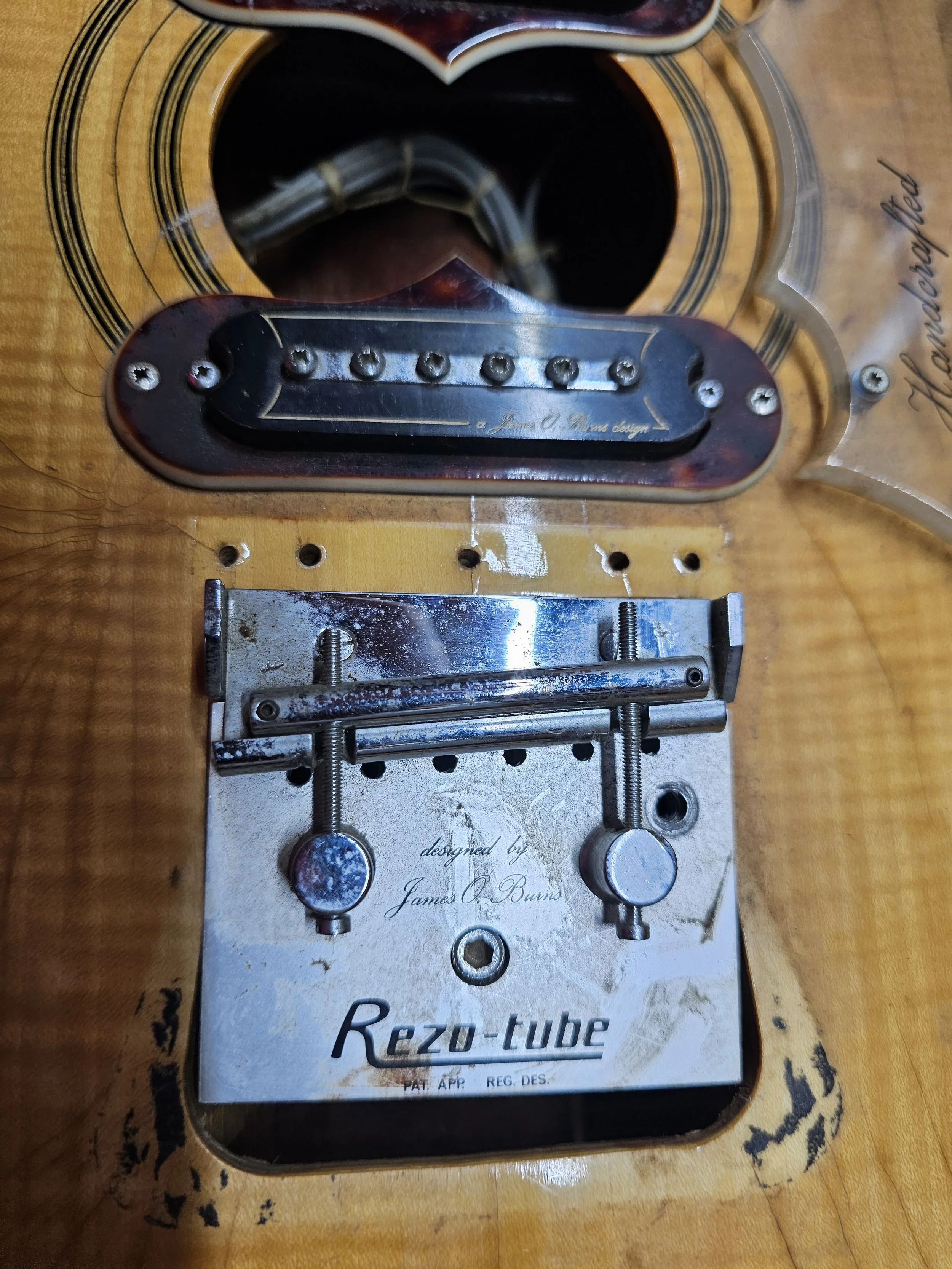
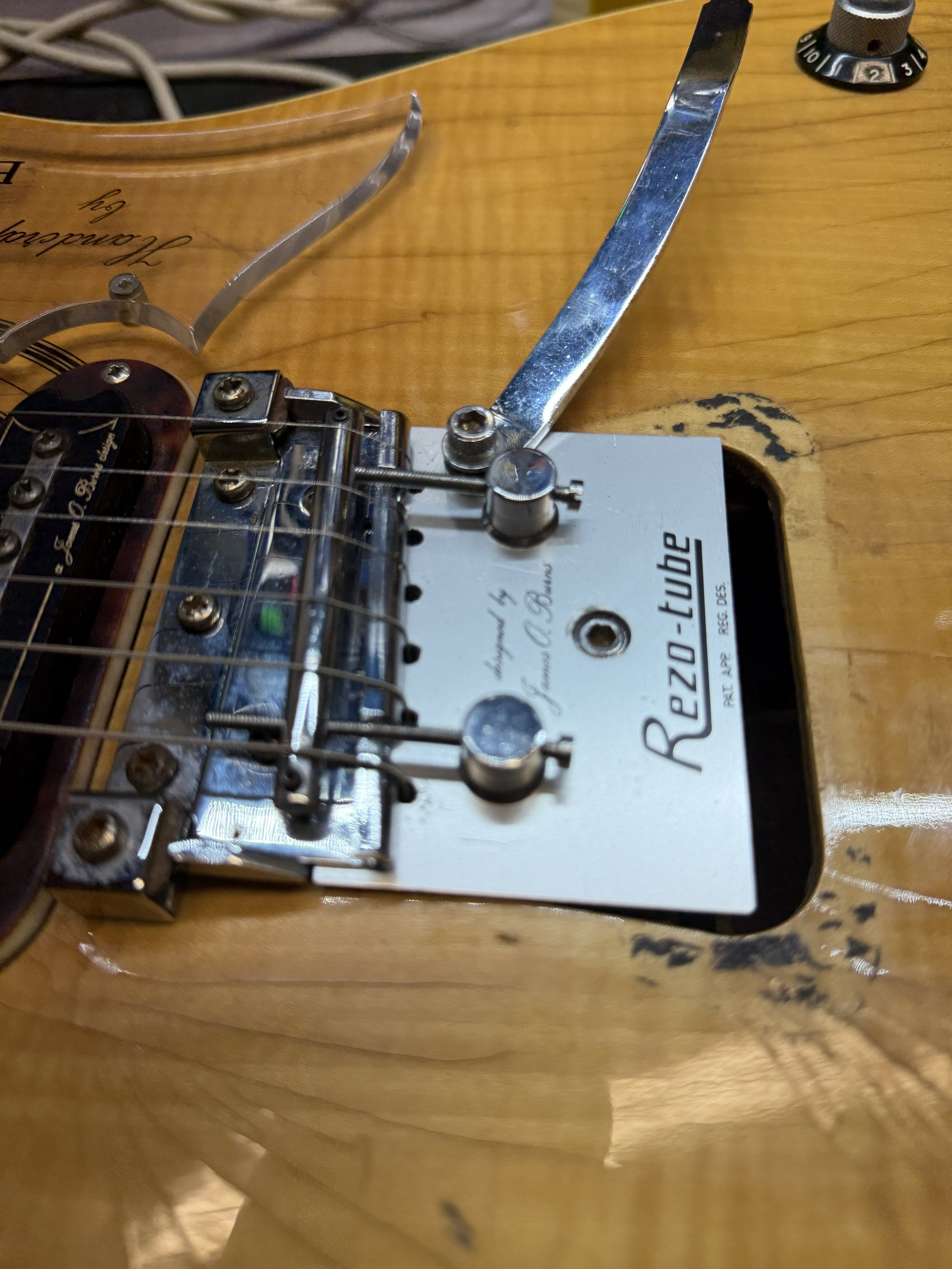
And, well, the Rezo-tube. Hmm. We never did find the black rubber pad that is designed to buffer the tremolo plate from the wood and close the hole. We tried making one, but could not find a proper consistency of rubber. The owner accepted the situation and allowed us to move on with the restoration.
The Final Result
THE INSTRUMENT
1965 transitional Burns/Baldwin Virginian
Scroll headstock
Rez-o-Tube vibrato
Rez-o-Matik pickups
Zero fret
Controlled Resonance bracing
Three-control Density circuit
Panda: Page Meets Green
An Indonesian custom build, four years of New England winters, and one wiring harness that refused to surrender quietly.
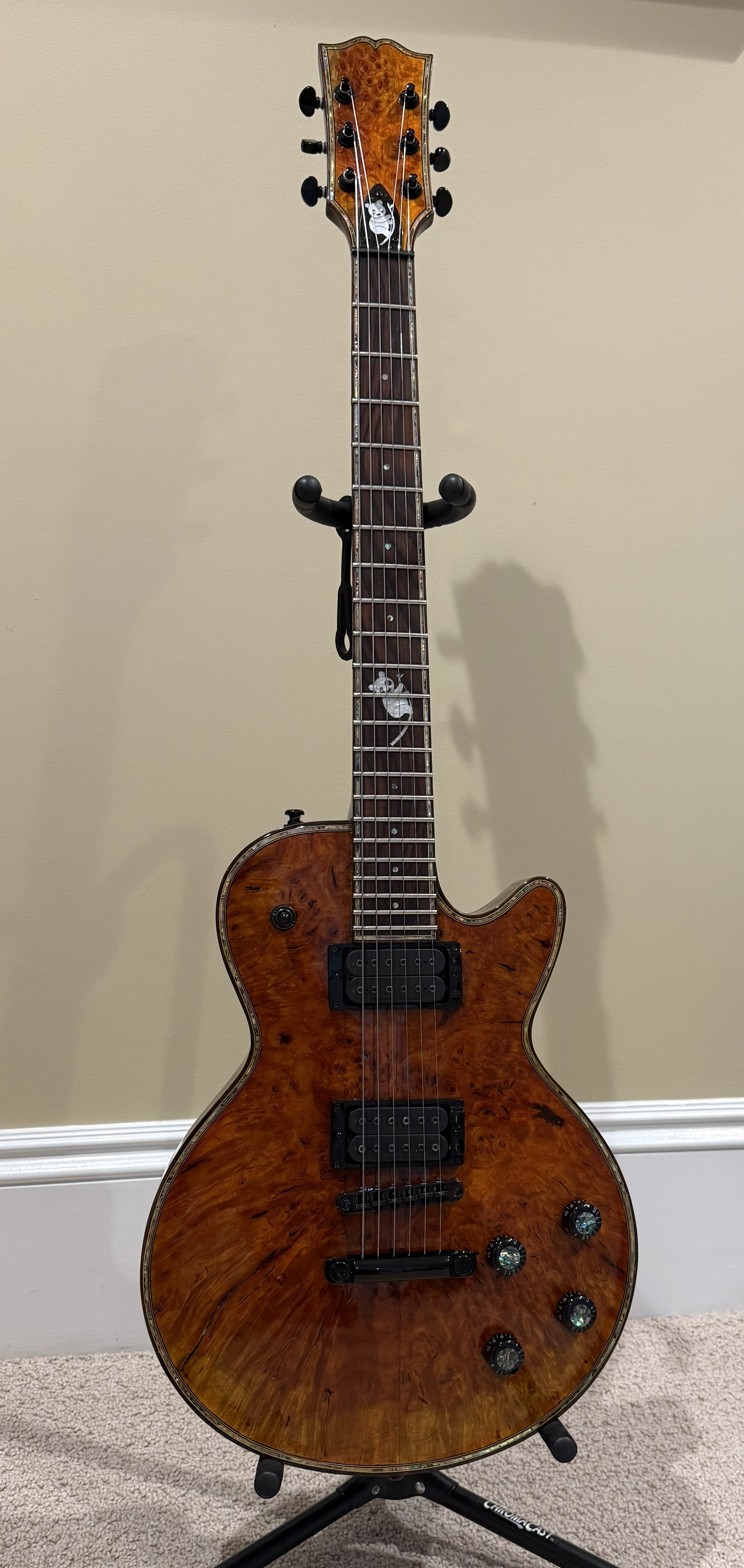
Panda arrived with all the ingredients of a great guitar: a striking burled top, unusual panda inlays, and more ambition than its original execution could quite support. After several years drying and settling in Boston, the guitar finally came to the AceSage bench for the resurrection it deserved.
What followed became one of the most ambitious projects on the bench — fretwork, a new TUSQ nut, hardware and setup work, and a completely reimagined control system inspired by two of rock’s most famous Les Paul sounds: Jimmy Page and Peter Green.
Page Meets Green
The heart of Panda is the switching. The control harness takes its inspiration from Jimmy Page’s famously flexible Les Paul wiring, then adds the hollow, nasal out-of-phase character associated with Peter Green. Push-pull controls open up series, parallel, coil-split and phase combinations far beyond a conventional two-humbucker guitar.
The goal wasn’t complexity for its own sake. After all the soldering, troubleshooting and a few genuinely maddening broken wires, Panda emerged as what it was always supposed to be: a great-playing guitar with an enormous range of usable sounds.